
Project outcomes
- To develop model-based techno-economic assessment and decision support tools for selecting technically feasible vinasse management technologies for the South African context
- To identify limitations in the existing technology options that, if overcome, could enhance the sustainability of ethanol production from sugarcane products
Focus areas
- Minimisation and beneficiation of effluent (vinasse) from bioethanol production
- Development of a sound understanding of the application of available vinasse management technologies to southern African vinasse and agricultural, economic and statutory conditions.
The liquid residue from ethanol production, vinasse, has potential for production of biogas and contains other chemicals that have potential value, if they could be economically recovered. Untreated, it is costly to dispose of in an environmentally sustainable manner. The international standard for first-line treatment of vinasse is anaerobic digestion. The vinasse characterisation found chemical constituents of value in vinasse, but, apart from potassium, these are at very low concentrations. An Excel TM-based decision support tool “The Rapid Response Tool” derived from the results of detailed ASPEN Plus ® modelling was developed. This tool reports the impact of various process options on the anaerobic digestion of vinasse. The user can adjust economic and vinasse parameters and select treatment configurations to allow different scenarios to be compared. The tool currently uses anaerobic digestion as a core technology to recover energy from vinasse as biogas or electricity and has scenarios that allow potassium-rich concentrated brine and water to be recovered as products. The value of salts as a source of high potassium fertiliser and recyclable water were incorporated into the modelling. However, other chemical constituents were considered to be too dilute to be economically recoverable from vinasse.
Characterisation of vinasse
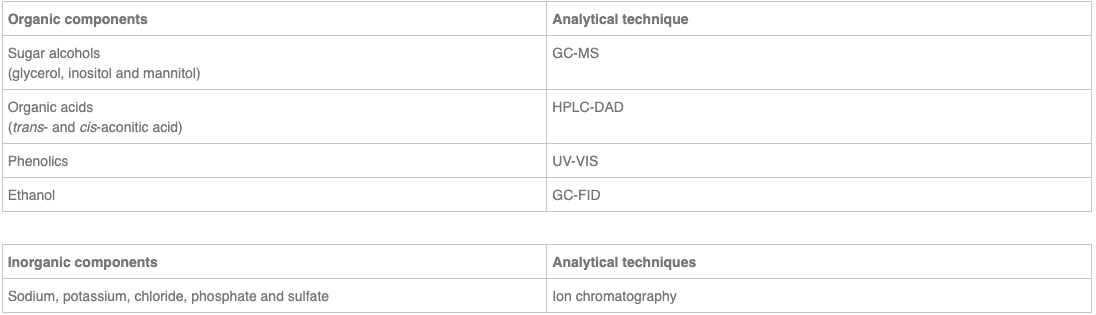
Detailed characterisation of vinasse has been undertaken to quantify macro and micro-constituents of the vinasse. Most analytes varied significantly between samples, reflecting the varying composition of the molasses feed to ethanol production. Only refractometric dry solids (Brix) was consistent between samples. Standard operating procedures have been established at the SMRI for:
Effect of pretreatment on anaerobic digestion of vinasse
Anaerobic digestion is the most common technology implemented for the treatment of vinasse. However, the high salt content of vinasse, especially the vinasse generated from the production of ethanol from molasses, provides a harsh environment for anaerobic microbes. A PhD project at the University of Cape Town investigated the potential for pretreatment of vinasse to enhance anaerobic digestion.
Dialysis and ion exchange were tested as means of reducing the salt content of vinasse before anaerobic digestion. Ion-exchange was found to provide selective removal of salts, yielding high concentrations and lower volumes of brine. However dialysis using a low molecular weight cutoff membrane (3.5 kDa) removed salts and some other inhibitants, including sulfur species, and resulted in better methane generation characteristics.
Gas hydrate technology for recovering water from vinasse
Gas hydrates, or clathrate hydrates, are non-stoichiometric crystalline structures that are formed through the combination of water, known as the host molecules, and gas molecules, known as the former (or guest molecules), under suitable conditions of temperature and pressure. Gas hydrates are considered a nuisance in the petroleum industry due to the problems they cause with the blockage of pipelines, but they have the potential for positive application in various engineering fields such as gas separation, carbon dioxide sequestration, gas storage and transportation as well as seawater and industrial wastewater desalination.
Two MSc students at the University of KwaZulu-Natal measured gas-hydrate equilibria for synthesized vinasse (solutions containing salts and some organic constituents to simulate the ionic and organic composition of vinasse) at different pressures. Large phase-equilibrium data sets have been generated to allow potential processes for vinasse concentration using gas hydrate technology to be simulated.
Gas hydrates will form in vinasse under suitable conditions, including low temperatures (<5°C) and high pressure (> 30 bar), however, the slow kinetics and energy cost of this technology compare poorly with existing technologies. Therefore, gas hydrate technology does not seem to be a feasible option for concentrating vinasse.

Dr Kitty Foxon
Research & Development, SMRI


