
A cost-effective method of removing leaves from sugarcane during harvesting is by burning sugarcane prior to cutting. Burnt sugarcane has the advantage of being easier to transport to the factory and easier to handle during factory processing. A consequence of burning sugarcane is the loss of additional biomass that could potentially be used for energy generation. With environmental pressures mounting, there is a potential risk that government could change regulations to prohibit the burning of sugarcane, which would enable the possibility of using brown leaf for renewable energy. Although co-processing brown leaf will have an impact on costs and operating conditions during cane preparation, extraction and back-end operations, the extent of the impact will be factory dependent. Should new legislation be introduced which prevents the burning of sugarcane or if there is a change in markets enabling value creation from sugarcane biomass, a decision will be required as to how best to manage and handle the quantity of matter associated with brown leaf from unburnt sugarcane. It is important that the sugar industry understands the challenges and costs associated with processing sugarcane with leaves and the impact it would have on sugar quality and recovery when compared to processing burnt sugarcane. The decision whether to separate the leaf in-field, at the factory before processing or to process the sugarcane with the leaves will be driven by economic assessments.
The effect of processing sugarcane with brown leaf on sugar quality and recovery are not well understood, however, the effects of handling, preparation, throughput, and extraction are well understood (Rein, 2007). Literature describes the effects of processing green cane with brown leaf on mixed juice quality, clarified juice quality, final sugar quality and sucrose recovery. The findings from these studies highlighted the need for additional research on the effects of brown leaf on juice quality and on percolation rates in the diffuser. In addition, the effect of sugarcane variety was not investigated thoroughly.
The project aims to investigate the contribution of brown leaf to non-sucrose and colour in extracted juice and colour and turbidity in clarified juice. Furthermore, the project aims to investigate the effects of added brown leaf on sugar colour and recovery. The project has three phases:
- Development of a pilot extractor that can be used to extract juice from prepared cane in such a way that the juice properties from the same cane in a diffuser could be inferred
- Investigation of the influence of brown leaf on the composition of the juice extracted from prepared cane
- Investigation into the fate of non-sucrose in juice extracts from green cane co-processed with brown leaf when subjected to clarification
A pilot extractor was successfully designed and validated by the project team (see Figure 1). The results from a study conducted using the pilot extractor indicated that any change to feed material would change the quality of extracted juice in a diffuser (Balkissoon et al., 2019). The addition of brown leaf decreased the density of the prepared cane, which will affect diffuser operations, including preparation equipment settings, feed roll settings, bed heights and chain speeds, and recycle/bypass settings in the different stages of the diffuser. Furthermore, the results indicated that when brown leaf was added to green cane, there was a decrease in the purity and an increase in colour and conductivity ash content of the extracted juice. Clarification tests found that the increased colour and conductivity ash content persisted in clarified juice. This suggests that the additional colour originating from brown leaf is not removed by clarification. There was a strong correlation between the amount of brown leaf in a sample of prepared cane and the colour and purity of the extracted juice, although the magnitude of these effects depended on the variety of cane processed.
The findings from the study suggests that co-processing high loads of brown leaf in the feed to a diffuser factory receiving green cane will result in changes to the extracted juice quality and the behaviour of the shredded cane in the diffuser. Thus, there may be a need to alter the machine settings and procedures, which will likely negatively influence product quality, recovery and/or cost of processing. The magnitude of these changes will be dependent on the amount of brown leaf processed, the variety of cane processed, and the changes to operating practices that would be implemented. The associated costs should be included in an overall cost-benefit analysis to determine whether brown leaf should be separated in-field, at the factory gate, or co-processed with cane.
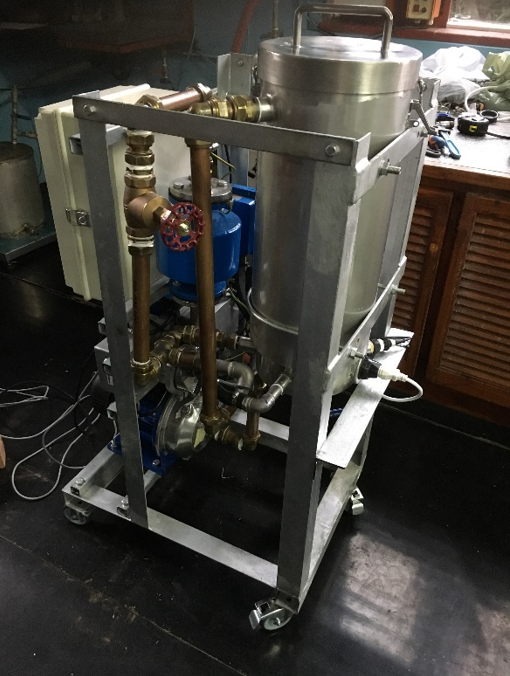
Figure 1. Photograph of the pilot juice extractor on site.
Reference:
Rein, PW (2007). Cane sugar engineering. Bartens, Germany, 768 pp.

Steve Davis
Research & Development Manager, SMRI