STEP-SF4.0 Development Projects
Cane preparation sensor
Host factory: UCL Company Ltd
This project aimed to develop a system that predicts characteristics of prepared cane from analysis of images of shredded cane, focusing on cane preparation for diffuser factories. The necessary project equipment was installed in the host factory in October 2020.
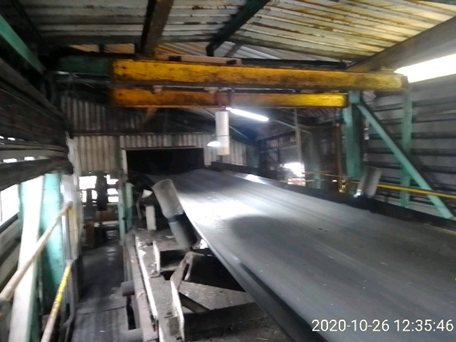
Camera in position above shredded cane conveyor
Data collection was performed until the end of the milling season in mid-December 2020. The captured images were analysed and compared with expert assessment of the prepared cane images.
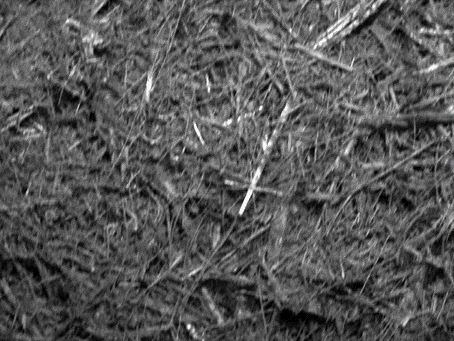
Image of cane, adjusted for contrast, taken immediately after the preparation plant started
Comparison of the rankings by the experts and the image analysis system revealed poor agreement between the image analysis system predictions, the analytical results and the experts’ rankings, and further work would be required to determine if the system could be made to work. It appeared that the range of degrees of preparation of the factory cane was too narrow to enable the image analysis system to be properly trained. A close-out report has been compiled: STEP-SF4.0 Cane Preparation Sensor Project
C-Centrifuge camera project
Host factory: Illovo Sugar Noodsberg mill
The aim of this project was to develop an image acquisition system that permits centrifuge operators to have a continuous internal view of the centrifuge basket. A camera mounting apparatus with built-in lighting was designed, installed and tested.
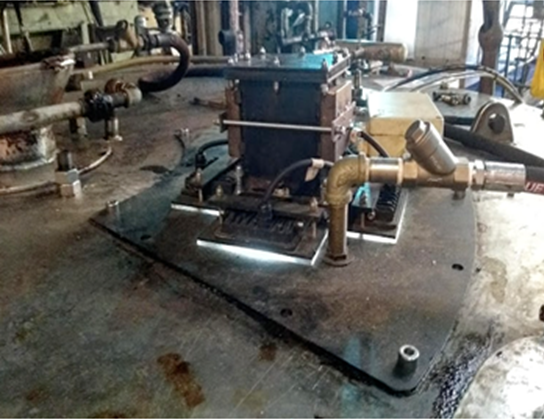
Camera and lights in mounting system on lid of C-continuous centrifuge
Juice sensing project
Host factory: RCL Foods Komati mill
The SMRI developed a system that senses the degree of juice saturation within the cane or megasse of a diffuser bed. The initial laboratory tests were successful leading to a second round of testing. Results were sufficiently promising and a factory-scale installation was tested at Komati sugar factory. Very positive test results were achieved, where the levels of juice and cane calculated from sensor inputs corresponded well with visual observations. A method was developed for displaying the information in a meaningful way that can be used by an operator as a decision tool for corrective interventions. A simulator was coded to test the applicability of the display method using a sample of data that was collected at Komati between April and June 2021. A close-out report has been compiled: STEP-SF4.0 Juice Level Detector
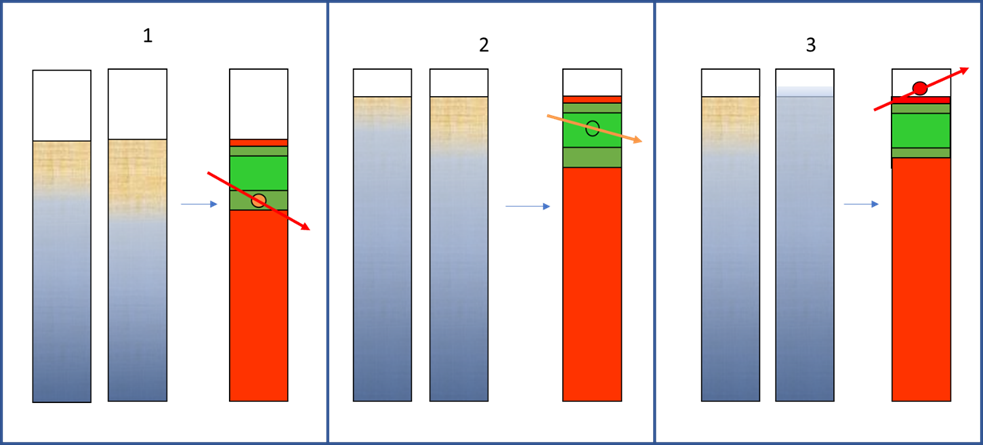
Proposed display technique to show scenarios based on the current juice condition and the condition minutes earlier
- Juice level is currently marginally low but will decrease below recommended level
- Juice level is currently within acceptable levels but decreasing slightly
- Juice is high and increasing to the point of flooding
Cane chemometrics
The feasibility of using NIRS-based chemometric methods for the identification of deteriorated cane. Proof-of-concept was demonstrated in laboratory trials using a laboratory-based air sampling device which required the use of shredded cane. Classification models based on the data obtained from these laboratory trials have been completed. These models were evaluated for their ability to predict deterioration using factory-sourced deteriorated cane. However, shredding of the cane caused the loss of the volatile organic compounds which were produced during deterioration, resulting in the unsuccessful prediction using these classification models. A commercial air sampling device was procured to mitigate the challenges presented by shredding of the cane and allowed the assessment to be made on whole stick or billeted sugarcane stalks. Validation of this commercial air sampler was successfully completed. A field trial was undertaken in January 2022 and discriminant analysis was applied to successfully develop and evaluate classification models for the prediction of deteriorated cane, with classification accuracies of 95.8-100% achieved for the prediction of deteriorated cane in a field trial.
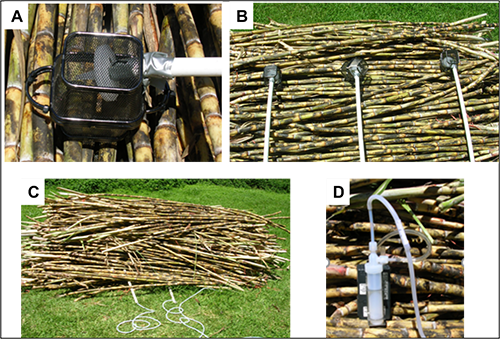
Simulation of field trial showing one of three filters in a wire-mesh basket (A) used as sampling points (B), with the pile of cane from within which VOCs were sampled (C) using a commercial air sampler (D)
The project is complete, and a close-out report has been written: STEP-SF4.0 Cane Deterioration Project. The project steering committee recommended possible follow-up work, which is now being undertaken via the SMRI Research Programme